9 Form Habits That Are Quietly Costing You — and How to Train Them Out
MarathonGuide Staff
Apr 20, 2026
COPY LINK
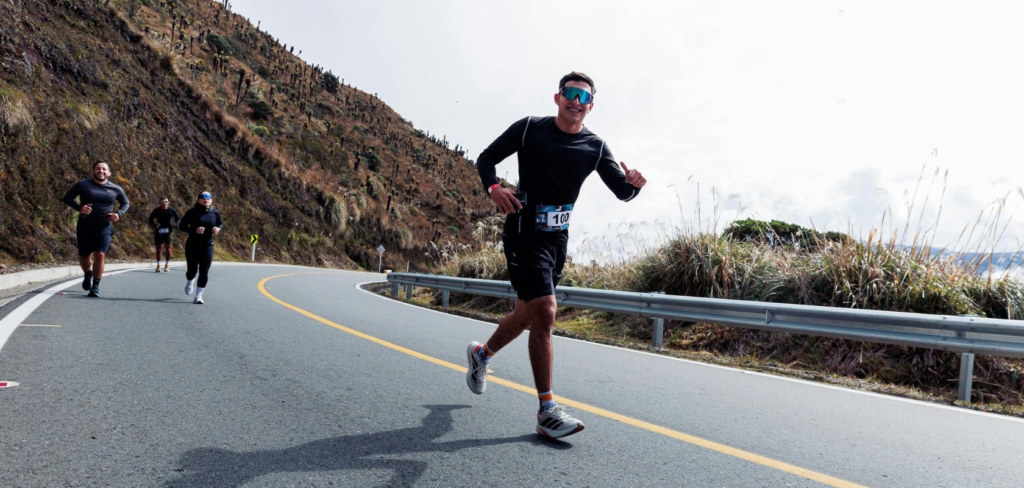
Most of us can spot a form breakdown in a training partner from half a mile away. Our own bodies? Not so much. You can feel perfectly smooth while leaking energy out of every footfall, and those small inefficiencies pile up mile after mile until they show up as a slower finish, a sore knee, or a training block that falls apart.
Here’s the encouraging part: form is trainable. Once you know what to look for, most issues respond quickly to a few simple cues and some targeted strength work.
What “Good Form” Actually Means
Think of running form as a stacking job. Your feet, legs, hips, torso, neck, and head should line up like a well-built tower, each piece carrying its share so no single part has to work overtime.
There isn’t one universal stride that every runner should copy. Watch the start line of any road race and you’ll see a dozen different styles win medals. What efficient runners share is balance, control, and an economy of motion — nothing wasted, nothing wrestled against.
Why Form Deserves a Spot in Your Training Plan
When your mechanics are off, your body improvises. Muscles that weren’t hired for the job suddenly take over, and muscles that should be carrying the load check out. That mismatch is how you end up with chronic tightness, unexplained fatigue, and injuries that seem to come from nowhere.
Dial form in and the opposite happens. Your breathing opens up. Your pace holds longer. Long runs feel less like battles and more like grooves you can settle into.
How to Audit Your Own Stride
Self-assessment mid-run is unreliable. What feels efficient and what actually is efficient are often two different stories.
The best training tool here is your phone. Have a friend film you from the side and from behind, then play it back in slow motion. You’re looking for telltale patterns: a foot that lands way out in front, a lot of vertical bounce, a hip that drops on one side, arms that cut across your chest, or a clear asymmetry between your left and right sides.
A coach or gait analyst can sharpen this picture further, but even a homemade video will tell you most of what you need to know.
Clues That Something Is Off
Training nudges you when form needs attention. Watch for: nagging neck or shoulder tension on runs, quads and hip flexors that stay tight no matter how much you stretch, labored breathing on easy days, a lopsided arm swing, repeat soreness in the same spots, knee or hip aches after runs, and footsteps you can hear from across the park.
None of these are death sentences for your running — they’re just your body filing a maintenance request.
The Nine Form Mistakes to Train Away
1. A Head That Drifts Forward
When your head creeps out in front of your shoulders, it tows your whole posture with it. The neck and upper back end up supporting a weight they weren’t designed to hold, which turns into tension, fatigue, and sometimes a post-run headache. Your breathing takes a hit too, since a forward head position compresses your airway.
This one sneaks in late in runs and also gets reinforced every hour you spend at a desk.
Training cue: Picture a string gently pulling the crown of your head upward. Eyes forward on the horizon, not glued to the ground or stretched out ahead. Do a posture check every few miles, especially once fatigue starts talking.
2. A Chin That’s Always Tilted Up
Looking too far up rocks your center of gravity backward, which messes with your balance and quietly encourages overstriding. It also strains the base of your neck.
Tired runners often drift into this, almost like they’re trying to haul themselves down the road with their eyeballs.
Training cue: Neutral chin, soft gaze, relaxed neck. If your chin rides up, reset your whole posture rather than forcing the chin back down.
3. Hunched or Rounded Shoulders
Shoulders that roll forward collapse your chest and steal breathing room. Easy runs start feeling oddly hard because your lungs aren’t getting their full range.
Rounded shoulders often travel with tight hip flexors and an underused upper back — a full-body chain of compensation.
Training cue: Drop your shoulders down away from your ears. Open the chest a touch. Keep the ribcage stacked over the hips. Every mile or two, give your shoulders a quick shrug-and-release to reset.
4. Arms Swinging Across the Body
Your arms set the tempo and steady the ship. When they cross the midline, your torso starts twisting to compensate, which wastes energy and makes your stride feel wobbly.
Over a long run, that’s thousands of small leaks adding up.
Training cue: Drive the elbows back, don’t chase with the hands. Arms stay roughly parallel to your direction of travel. Keep the hands loose — an unclenched fist is a faster fist.
5. Overstriding
This is the big one. Your foot lands too far ahead of your body, and every step becomes a small brake. Impact forces spike, and your knees and hips absorb the bill.
It often happens when runners try to pick up the pace — longer, more heroic strides feel fast but actually slow you down.
Training cue: Shorten the stride and bump up your cadence. Land under your hip, not in front of it. “Quick, light feet” is the mental soundtrack. A metronome or cadence-tracking watch can be a useful training tool here.
6. Glutes That Aren’t Showing Up
Your glutes are the big engine of the running body, and they’re also the muscle group most likely to be coasting. When they sleep through a run, your quads and hip flexors cover the shift — and they get grumpy about it.
The symptoms show up as tight hips, knee discomfort, and shaky stability, which is why it often gets misdiagnosed as anything but a glute issue.
Training work: Wake the glutes up before runs with bridges, clamshells, and banded walks. Build strength with hip thrusts, step-ups, and split squats on non-run days. While you run, think about pushing the ground behind you instead of reaching forward.
7. Knees Caving Inward
Knees that drift toward each other throw off the whole lower-body chain. Stress lands in the knees, ankles, and hips, and it can open the door to shin splints and plantar fasciitis.
The root cause is usually weak hip stabilizers and poor single-leg control.
Training work: Knees track over the toes, always. Strength-train the hips and glutes, and lean into single-leg work — lunges, step-downs, single-leg deadlifts. Control on one leg at a time translates directly to cleaner mechanics on the road.
8. Running on Your Toes
A chronic forefoot-only strike overloads the calves and Achilles, especially as mileage climbs. Forefoot contact has its place in short sprints and hill work, but living up there for 26.2 is a fast track to strain.
This sometimes shows up in runners who’ve been told their heel strike is “bad” and have overcorrected.
Training cue: Let the foot strike settle into something natural — usually midfoot to light forefoot — and make sure it’s landing under your body. Controlled and relaxed beats forced every time.
9. Loud, Heavy Footfalls
If you can hear every step from across the park, you’re landing with more force than you need to. Loud feet are usually downstream of overstriding, a slow cadence, or collapsed posture — or all three.
That impact doesn’t just waste energy, it wears on joints and connective tissue rep after rep.
Training cue: Run like you’re trying not to wake someone up. Quieter feet tend to come from better mechanics, not from consciously trying to land softly. Nudge your cadence up, stack your posture, and let the volume drop on its own.
Putting This Into Your Training
You don’t need to overhaul your stride all at once. Pick one cue per week and work it into easy runs, where you have the mental room to pay attention. Pair the cue with a strength routine two or three times a week — glutes, hips, single-leg control — and film yourself again after a month.
Form isn’t something you fix once and forget. It’s a thread you run through the rest of your training, quietly, for the rest of your running life.
COPY LINK
You are free to use this material for non-commercial purposes. This means you can read it, share it with others, and use it in your own personal projects. For more information on the rules for using this material, please read the following documents:
Creative Commons LicenseAll rights reserved. Copyright © 2026 Marathon Guide